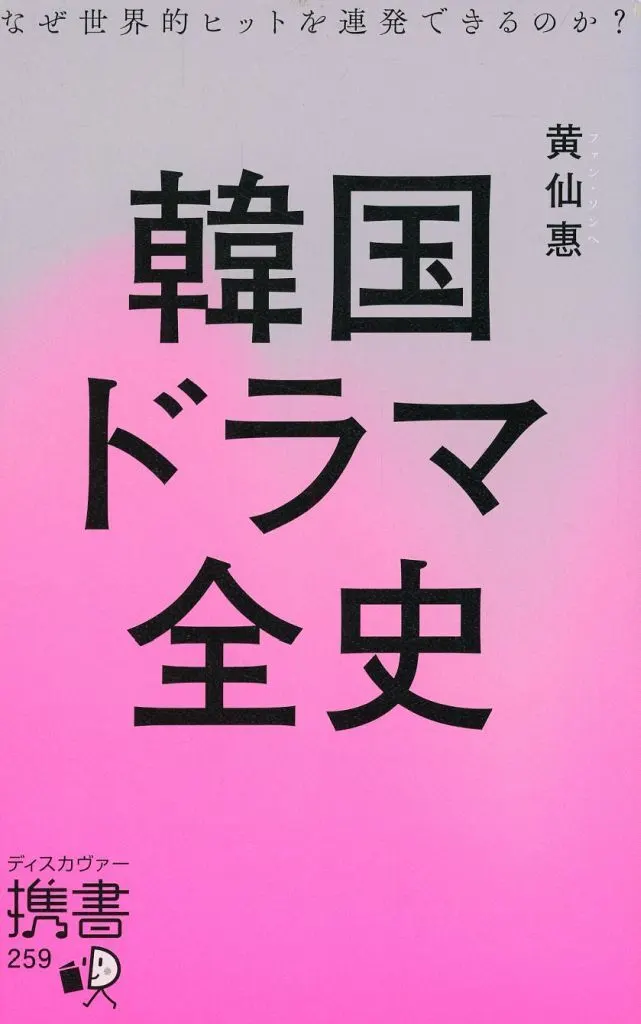
Korean Drama : Why are Korean dramas so successful in the world? / Megumi 黄仙


Product description ※Please note that product information is not in full comprehensive meaning because of the machine translation.
Society
[Introduction to Content]
The major turning points in the development of South Korean content were the 1997 currency crisis and the IMF bailout.
President Kim Dae Jung, who took office in response to the crisis, positioned the cultural industry as a key industry in the 21st century and promoted the transition to a knowledge-based information society and the development of the IT industry.
During this period, South Korean dramas changed from the traditional flamboyant trendy dramas to IMF-style dramas that depict family love and bonds.
This became a factor that shaped the "South Korean drama" style.
At the same time, the IMF crisis forced South Korean content industry to undergo major structural reforms.
Production companies became aware of the importance of the rights business and focused on securing iPS and expanding abroad.
In particular, PAN Entertainment, which produced the 『 Winter Sonata 』, succeeded in generating significant revenues by focusing on owning rights abroad.
In recent years, the rise of global platforms such as Netflix has strengthened the position of production companies.
Production companies are shifting from traditional broadcast-led production to a "studio system" in which production companies handle everything from planning and development to rights management.
Also, new attempts such as the introduction of a co-writing system and training of young creators have been active.
The success of South Korean content can be seen not as a mere "national policy" but as a result of structural reforms stemming from the IMF crisis and the introduction of a co-writing system.
The success of South Korean content can be seen not as a mere "national policy" but as a result of structural reforms stemming from the crisis of the IMF crisis and the "studio system" in which production companies handle everything from planning and development to rights management.
Also, new attempts such as the introduction of a co-writing system and training of young creators have been active.
Contents
Chapter 1 : The Driving Force of the Korean Wave and the International Monetary Fund (IMF)
Chapter 2 : Taking Advantage of the Crisis - The Rise of South Korean Dramas
Chapter 3 : Sharing of TV stations and drama production companies
Chapter 4 : The Struggle of Scriptwriters to Draw Original Stories
Chapter 6 : The Future of South Korean Dramas and Human Resource Development
Chapter 8 : Interviews Possible