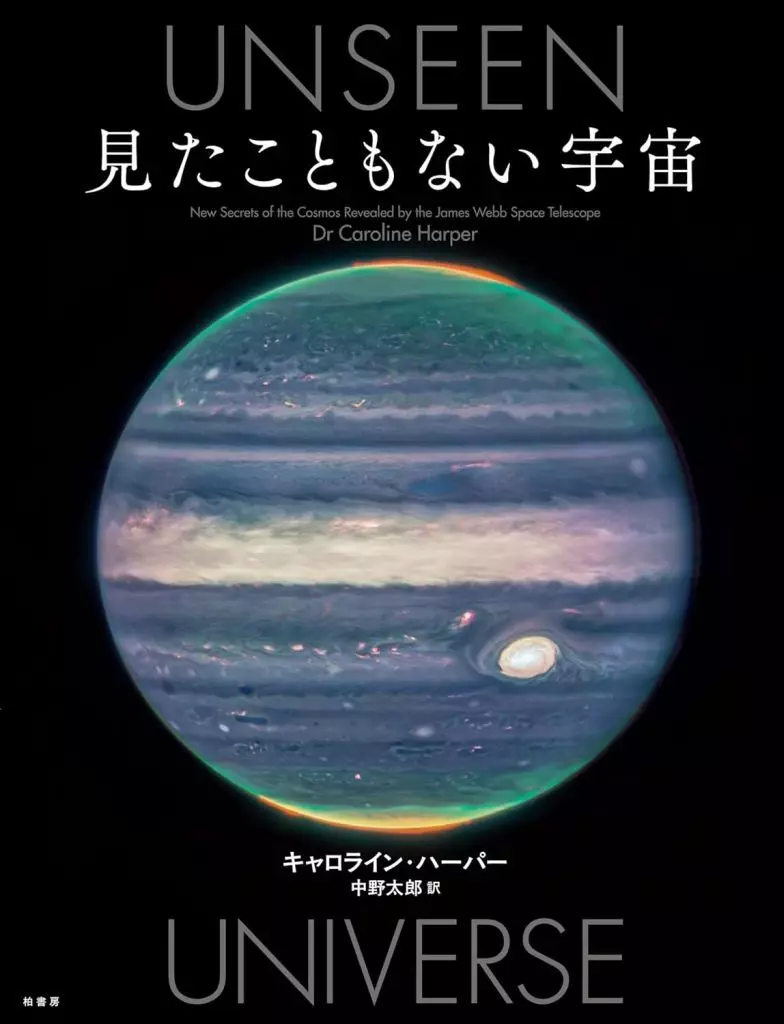
Astronomy and space science Never-Seen Space / Caroline Harper / Taro Nakano


Product description ※Please note that product information is not in full comprehensive meaning because of the machine translation.
Astronomy and Space Science The James E. Webb Space Telescope was launched in December 2021. It is the latest space telescope developed to observe the first stars after the Big Bang. It is the successor to the Hubble Space Telescope launched 30 years ago in 1990. It is designed to observe redshifted light that has never been seen before.
You can see more extended wavelengths coming from far away.
In other words, you can get closer to the beginning of the universe than before.
In addition, the aperture is more than 2.5 times larger, from 2.4m to 6.5m, and it is expected to be able to observe more precisely.
This book introduces the amazing technologies such as the observation results of the Solar System, fixed stars, deep space, galaxies, exoplanets, black holes, etc., which are cooled to 266 ℃, covered by sun shields, and protected from minute vibrations.
This book expands from the history of the development of the James E. Webb, the description of each equipment, and the contrivance to prevent the influence of infrared rays. For example, the telescopes have been cooled by the sun shield, and are protected from minute vibrations.
This book expands from the observation results of the Solar System, fixed stars, deep space, galaxies, exoplanets, black holes, etc., by this telescope, to future missions, together with observation photographs and explanatory diagrams.
First of all, please look at the latest images of the universe that have never been seen before.
Contents
Chapter 1 Solar System
Chapter 2 Fixed Stars
Chapter 3 Deep Space
Chapter 4 Galaxies
Chapter 5 exterior planet
Chapter 6 Black Holes
Chapter 7 Future Missions
space scientist.
Director of the Space Science Department of the United Kingdom Space Agency (UKSA), Member of the ESA Science Program, and Fellow of the Royal Astronomical Society of the United Kingdom.