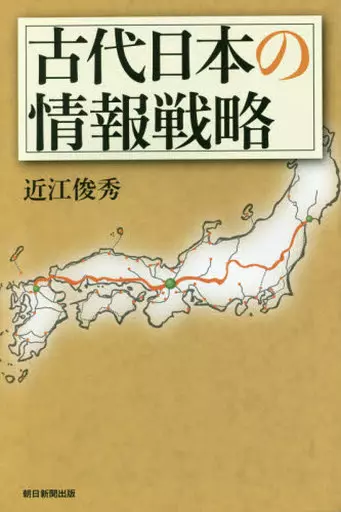
History of Japan How roads and networks of the nation under the ancient Ritsuryo system were built and utilized Asahi sensho


Product description ※Please note that product information is not in full comprehensive meaning because of the machine translation.
Japanese History
Politics, Economy, Society
/ The ritsuryo system is a system to maintain a centralized administrative system through thorough document management. By the middle of the eighth century, this system of delivering documents sent by orders from the central government spread to local areas, and information on crises such as rebellions, rebellions of Ezo in Togoku (the eastern part of Japan, particularly the Kanto region), famine, epidemics, and local situations were promptly reported to the central government, making it possible to control local areas with certainty. How the delivery was carried out, where the Ekiya was installed, and how the Shichido station road was constructed. We carefully look at the stations, Ekiya and Ekiya Village that appear fragmentarily in ancient historical materials including records, excavated materials and literature, and explore their installation and actual conditions. We also examine the characteristics of Japanese station roads, such as the laying method of the station roads and the structure of the Ekiya, which have come to be seen in detail from recent excavations and surveys. In the early ninth century, the delivery system collapsed due to the escape of Ekiko, etc., and the station roads became desolate. After that, powerful temples and shrines and powerful families controlled local areas in a decentralized manner, and in the capital, aristocratic politics developed in which policies were decided by internal reports to the emperor. The bureaucratic system of governance collapsed early, and the ancient centralized administrative system did not last long. We read the process through the station roads.